
Holding New Parents Through the Unknown
Designing postpartum mental telehealth support with empathy, clarity, and care.
Type
UI/UX Design
Product Strategy
User Research
Date
June - Aug 2023
(2 months)
About
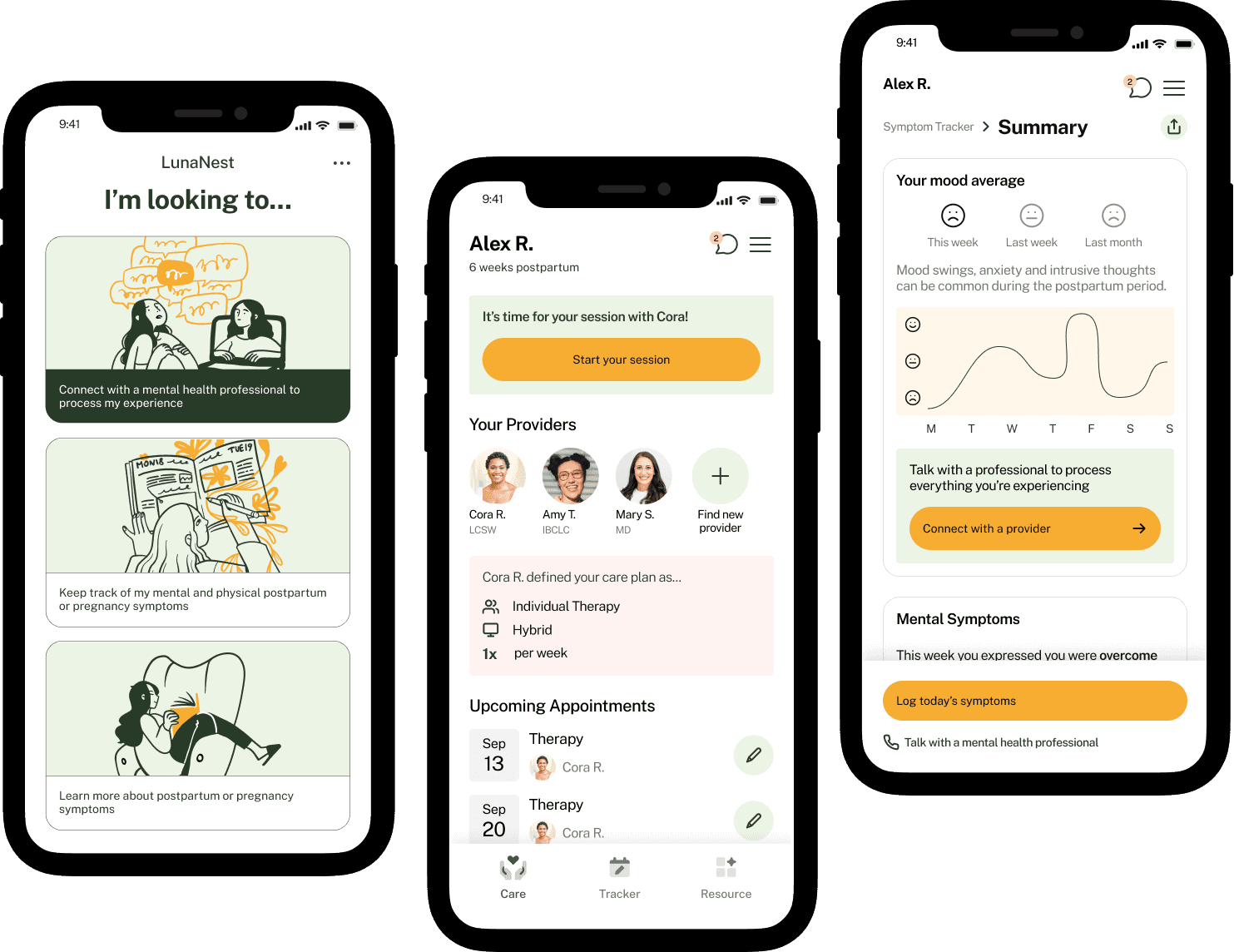
LunaNest*, known for its national network of lactation consultants, saw a growing need to support new parents beyond feeding — especially around postpartum mental health. To meet this need, they partnered with BCG to explore how to create a personalized, stress-free digital experience. The goal is to design an app that extends the trust parents already have in LunaNest into accessible mental health support.
My Contributions
Led user and competitive research to uncover emotional pain points and unmet needs in the postpartum journey
Defined the MVP and prioritized features based on parent needs, feasibility, and business impact, collaborating with PMs and Growth teams
Developed a warm visual language and custom illustrations to create an experience that felt calm, supportive, and non-clinical
*This case study has been sanitized based on a real BCG project. The client name, LunaNest, is fictitious.
01. Design Problem
DESIGN PROBLEM
New parents struggle to access personalized, timely, postpartum support including mental, emotional, and practical, because existing resources are fragmented, hard to navigate, and disconnected from the realities of early parenthood.
Despite the abundance of information online, new parents often feel overwhelmed, isolated, and underserved. Mental health, lactation, and symptom tracking tools exist—but they live in silos, lack warmth, and demand too much from users at a time when energy and clarity are in short supply. The result is a gap between what new parents truly need and what today’s systems deliver.
USER RESEARCH
Why this problem?
I firstly conducted in-depth user interviews, interviewed 22 birth parents (<6 months postpartum) to identify pain points, emotional struggles, and validate early concepts.

Insights from User Interviews






COMPETITOR ANALYSIS
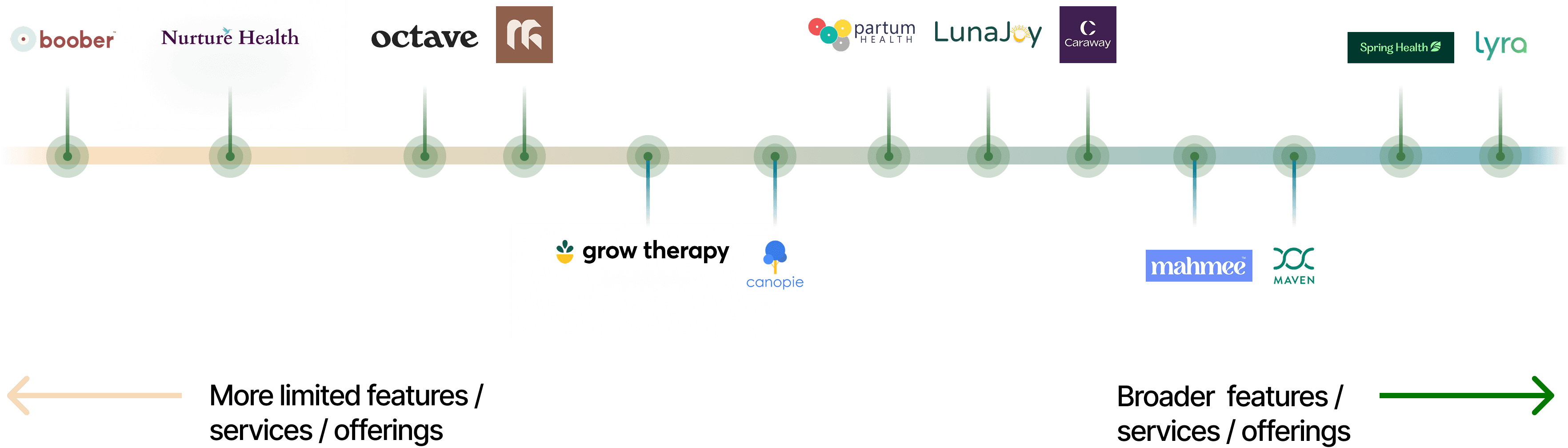
Postpartum mental health care is underserved
Most mental health platforms prioritize broad, scalable solutions, but few offer the specialized, personalized, and emotionally supportive care that new parents need during the postpartum period—revealing a clear gap and opportunity in the market.
Competitor Landscape

DESIGN CHALLENGE
How might we create a seamless, supportive experience that connects new parents with personalized postpartum care, without adding to their mental load?
02. Ideate & Envision
As a team, I facilitated a design feature workshop with product managers, engineers to brainstorm product features extensively, narrow down the list by voting and the effort/impact metrics map.
Feature Prioritization Workshop
Access and
Navigation
Warm, guided UI flow

Mobile-first design

First-time user tips

Instant chat triage
In-app scheduling
Email reminders

Community and
Emotional Support
Parent-led discussion threads / forums

Buddy system for new parents

Moderated peer group sessions
Weekly virtual check-ins with facilitators
Personalized and Specialized Care
Personalized homepage

Choose needs on homepage
Collect personal info (e.g., stage)

Filter therapist directory
Network of postpartum providers
Show locations, reviews, introductions
Teladoc
Trusted, Relevant Information
Deliver articles based on baby’s age
Centralize resources from trusted providers
Symptom Tracking
and Self-Reflection
Daily mood and symptom check-ins

Smart journal prompts

Underserved
Postpartum Needs
Design the app specifically for postpartum
Partnerships with hospitals, OBs, and doulas
Define MVP: Prioritizing What New Parents Need Most
Based on the results, we aligned on three core MVP features to focus on. These features address key pain points for new parents—uncertainty on where to begin, barriers to accessing care, and difficulty tracking their own wellbeing.
Define MVP


03. Test and Iterations
USER TESTING
Quick testing with lo-fi and concept cards
To quickly validate MVP ideas, I created
low-fidelity prototypes for interaction-heavy flows
concept cards for content driven areas
This approach allowed me to balance speed and depth, and prioritize what resonated most with users before moving into higher-fidelity design.
FEEDBACK & ITERATION
From user insight to design iteration
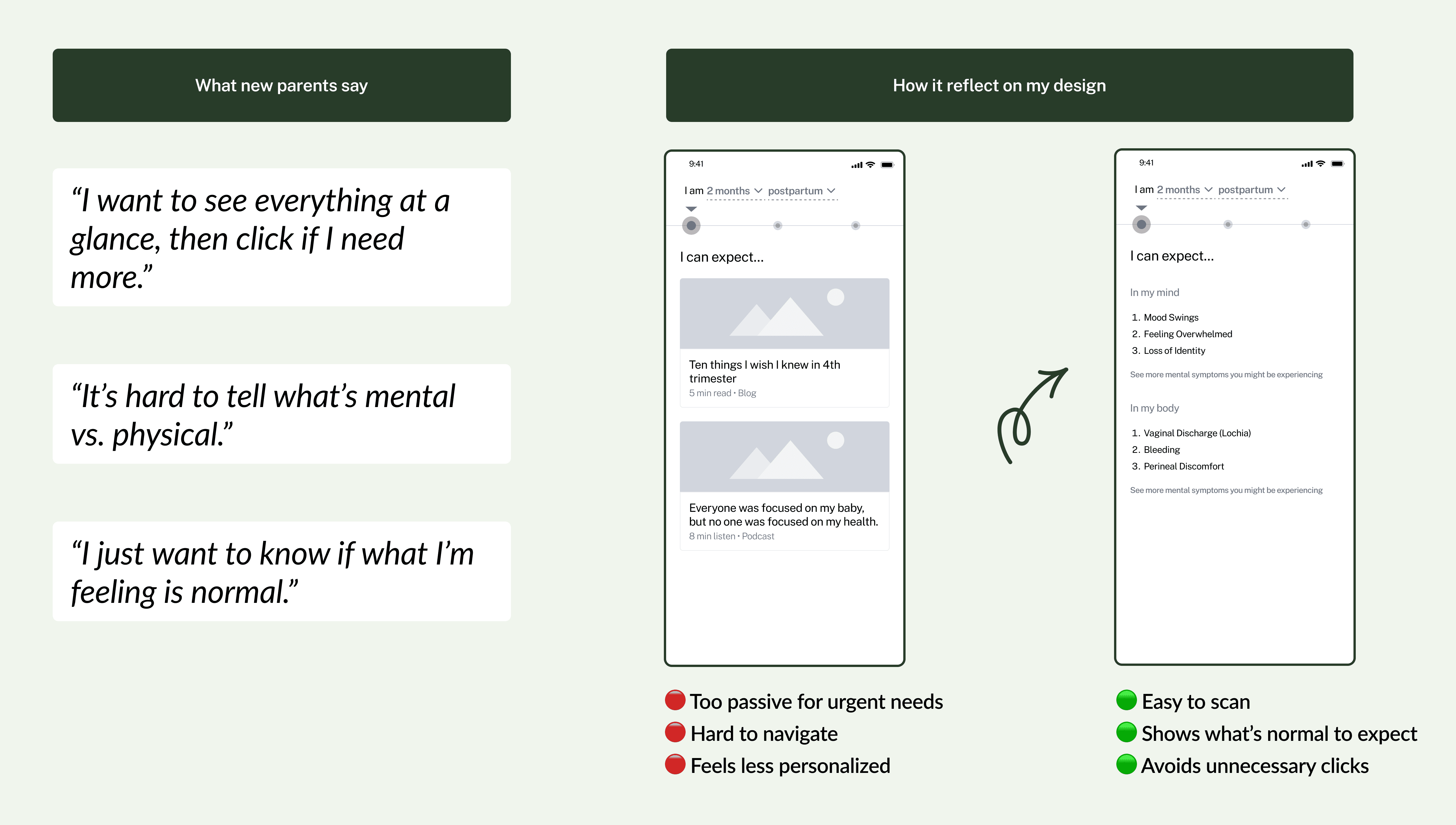
Throughout testing, I made multiple iterations based on direct user feedback—refining layout, visual cues, language, and flow to better support the mental and emotional load of postpartum life.
Example Iterations Based on Test Feedback
04. Prototype Highlights
INTAKE
Onboarding as a Conversation
I crafted soft visuals and relatable language to guide parents through a few thoughtful prompts—more like a conversation with friends than a clinical intake form. Unlike competitors’ long forms, our warm, simple approach reduces drop-off and builds early trust.
PROVIDER MATCHING
Letting Parents Lead the Provider Match
I shifted from system-led prompts to parent-led statements, using a first-person voice to create a more personal, empowering experience. I also added a must-have filter so parents could clearly express non-negotiables—critical when navigating care in a vulnerable moment.
SYMPTOM TRACKER
Track Symptoms for Both Body and Mind
Parents can log emotional and physical symptoms proactively or through text/email reminders—building routine, bridging gaps in competitor tools, and offering clarity in a confusing time. Educational tips alongside entries help parents know what’s normal and when to seek help.
SYMPTOM SUMMARY
Summary for Clarity and Confidence
The summary offers a clear visual snapshot of patterns over time. In interviews, parents said this helped them recognize trends, validate feelings, and feel more prepared for provider conversations—bringing clarity when self-doubt and fragmentation are high.
05. Takeaways
Empathy isn’t just a value—it’s a design tool. Understanding the emotional state of postpartum parents helped me design experiences that felt human, supportive, and non-intrusive.
Personalization builds trust. When users see content and care options that reflect their stage, needs, and preferences, they’re more likely to engage and feel empowered.
Story-driven design can reduce friction. Replacing clinical intake forms with conversational flows, gentle visuals, and relatable stories created a sense of safety and agency.
MVPs can still be meaningful. By narrowing scope with PMs and Growth teams, we delivered real value fast—without losing emotional depth or user trust.
How might we empower change managers to drive AI adoption through real-time insights, smart automation, and evidence-based interventions?
