
Reflection Rooted in Nature
Helping people journal, breathe, and reconnect, with themselves and the natural world.
Type
UI/UX Design
Product Strategy
Visual Design
Date
Feb - Oct 2024
(9 months)
About
A leading wildlife foundation in Asia partnered with BCG X to explore how nature-inspired digital experiences could support mental wellbeing in the workplace. Together, we set out to design a behavior-change product that blends emotional wellbeing, playful reflection, and wildlife storytelling.
My Contributions
Led UX and visual direction across reflection flows, mood check-ins, AI-generated wellbeing suggestions, and immersive breathing experiences
Shaped the behavior-change strategy, designing nudges, habit moments, and nature-inspired micro-interactions to encourage ongoing engagement
Developed a cohesive visual language grounded in wildlife textures, natural palettes, and gentle motion to create a calm, emotionally safe experience
*This case study has been sanitized based on a real BCG project. The product name, WildJournal, is fictitious.
01. Design Problem
DESIGN PROBLEM
Employees want accessible, personalized ways to care for their mental and emotional wellbeing at work.
Despite the rising awareness of workplace wellbeing, many employees still struggle to check in with their emotions, build healthy habits, or find moments of calm during the workday. Current wellness solutions often feel transactional or burdensome: they ask users for effort when their energy is already low, lack emotional warmth, and rarely adapt to the individual.
At the same time, the wildlife foundation saw an opportunity to bring nature-inspired calm and conservation storytelling into everyday life, but needed a digital experience that could make that connection feel authentic, meaningful, and behaviorally effective.

DESIGN CHALLENGE
How might we design a gentle, nature-inspired journaling experience that helps employees notice their emotions, build small habits, and reconnect with the natural world?
02. Early Exploration
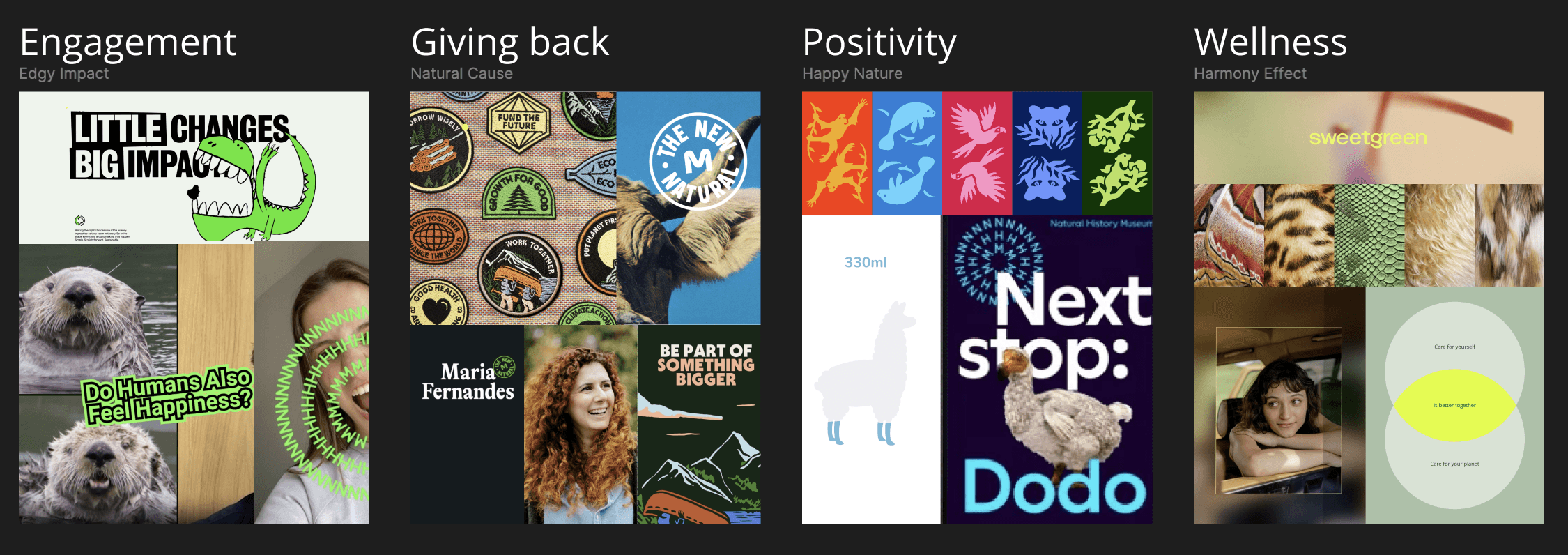
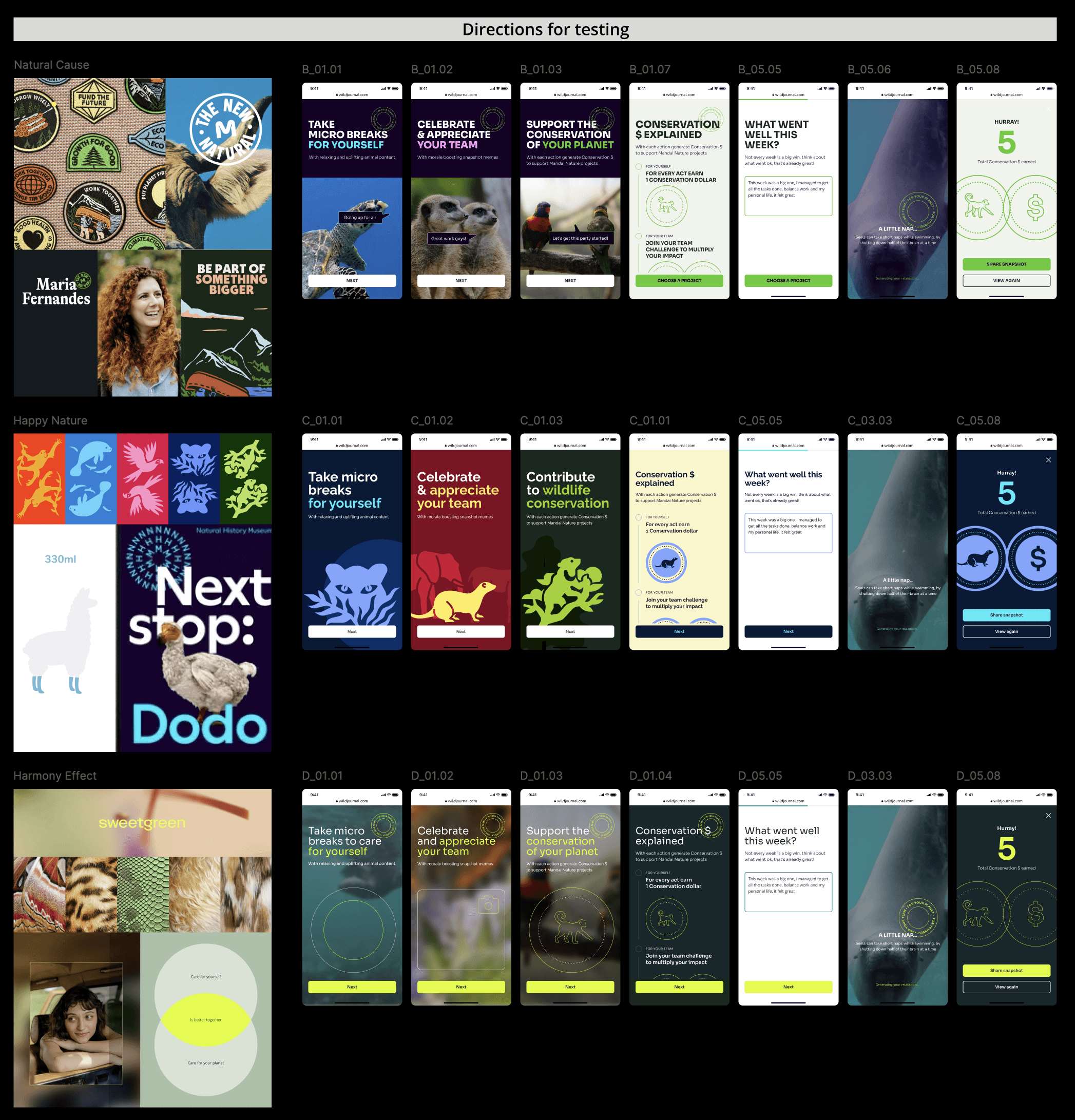
To define the emotional tone of WildJournal, I started with a visual exploration phase built around four key themes that emerged from our research: Engagement, Giving Back, Positivity, and Wellness. Each theme represented an emotional dimension the product needed to support, from sparking curiosity to creating moments of calm.
Moodboard
Directions for testing
03. The Refresh
MOOD CHECK-IN
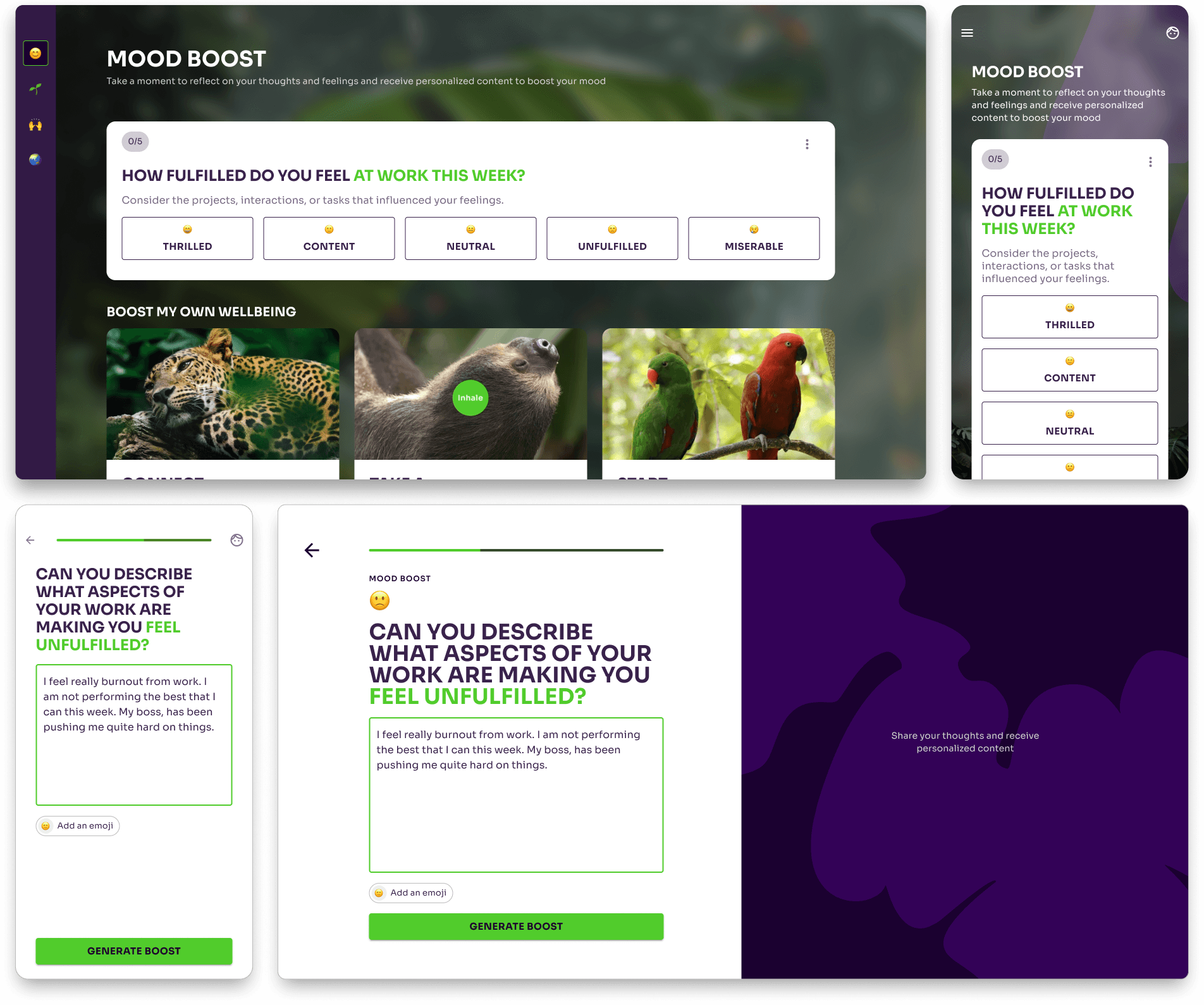
Journaling Made Simple
We redesigned the mood check-in so employees could record emotions in seconds.
Clear hierarchy
Emotion-driven prompts
Nature-inspired visuals to soften the moment
DEEP BREATHING
Immersive Moments to Reset
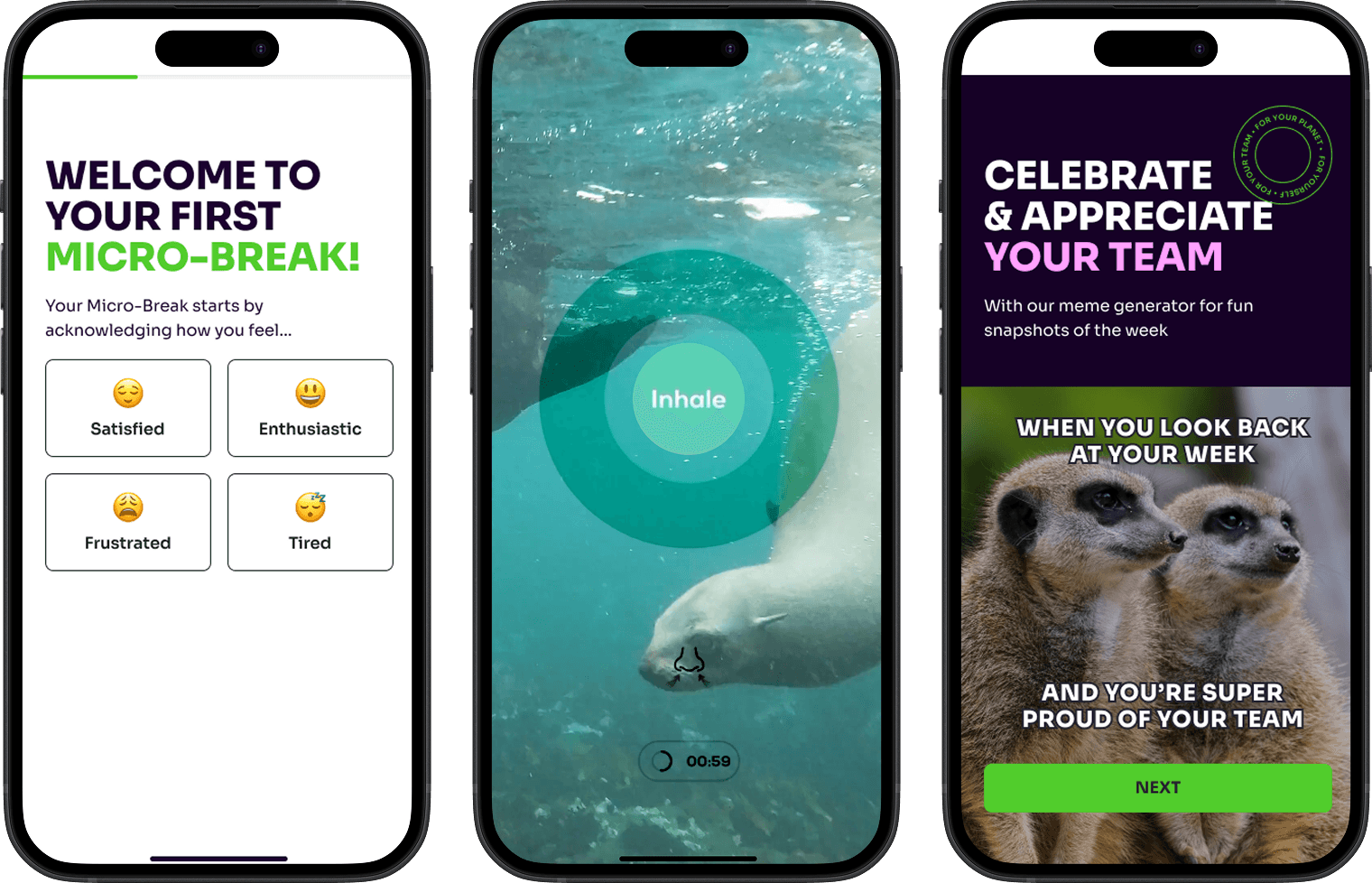
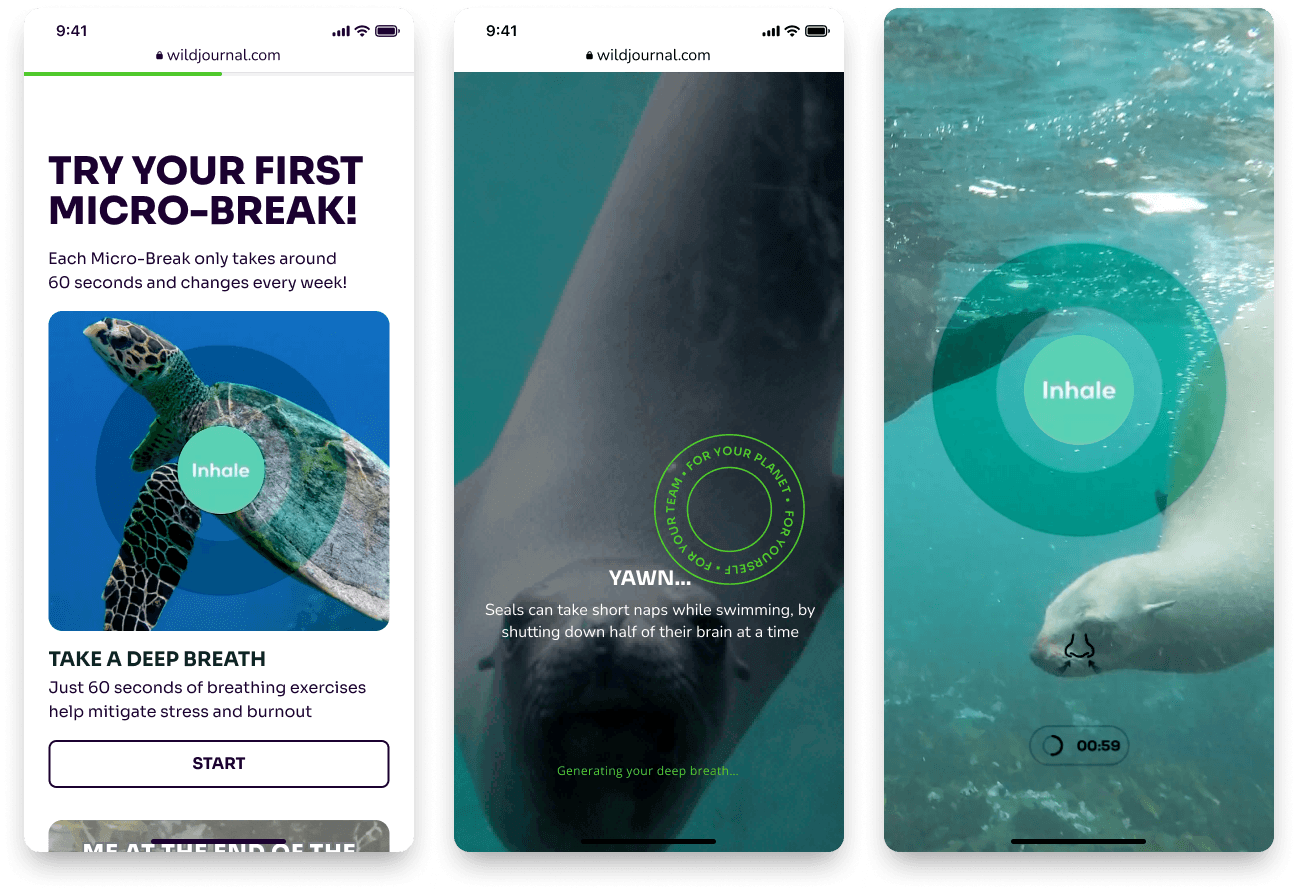
To help employees regulate stress quickly, I created a full-screen breathing experience using wildlife footage and subtle motion cues. This transforms a simple exercise into a calming micro-escape, encouraging users to pause without feeling interrupted.
CARE TIMELINE
Turning Small Reflections into a Story
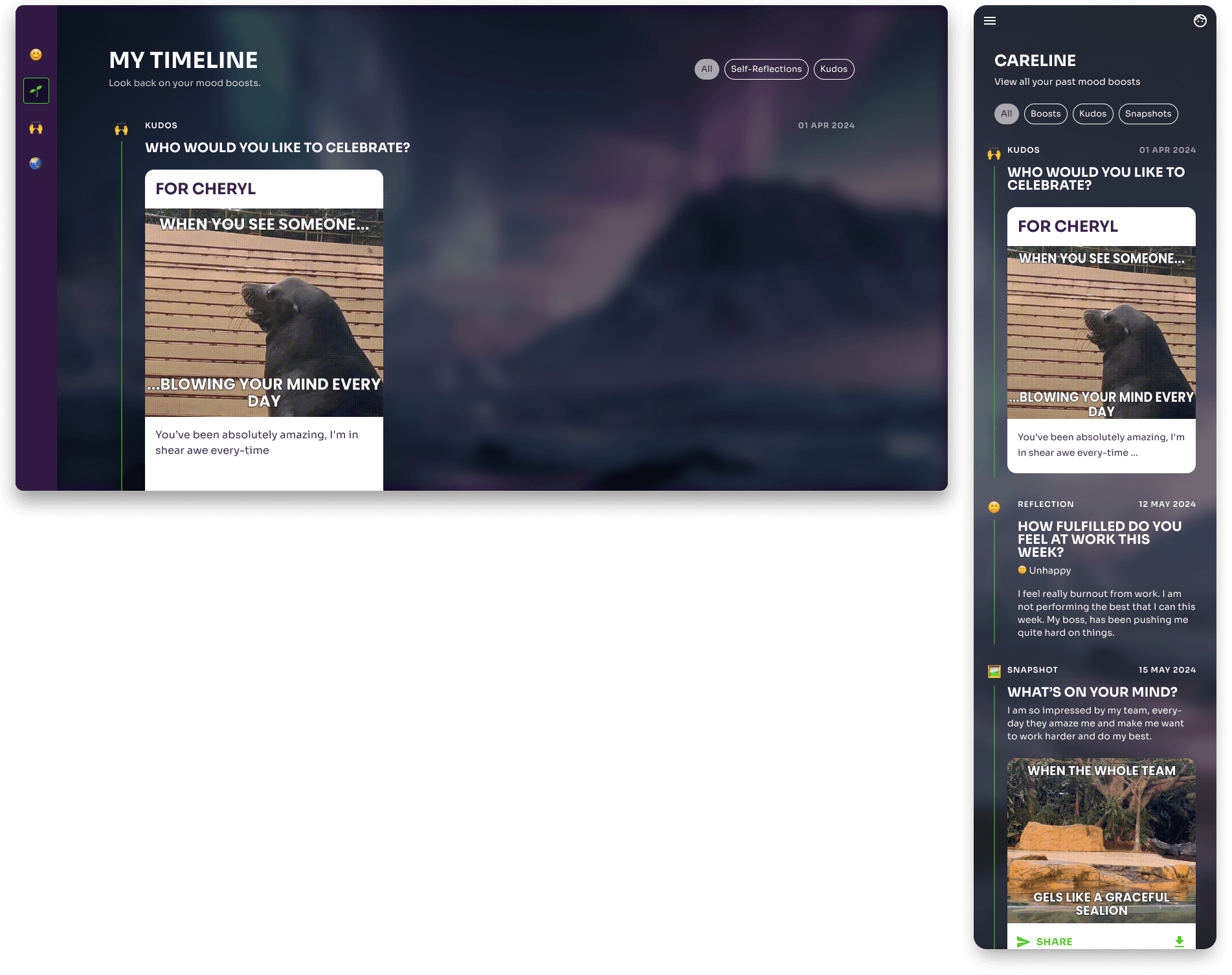
The CareLine offers a chronological view of moods, boosts, and shared snapshots, helping employees see patterns in their emotional wellbeing. By visualizing small moments over time, it makes reflection feel personal and meaningful.
MOTIVATION LOOP
Wildlife-Powered Habit Building
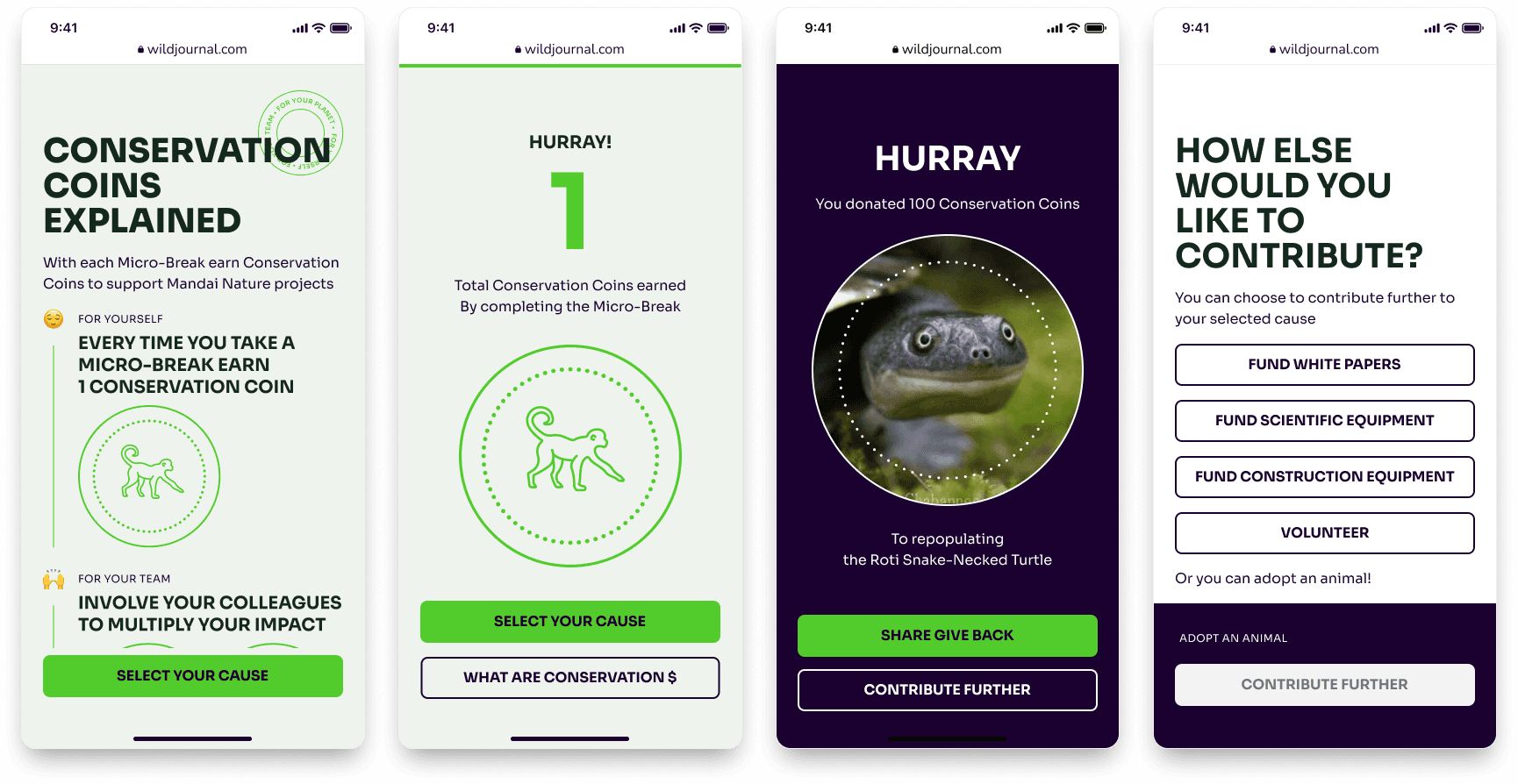
I designed a gentle reward system where users earn “wildlife coins” for completing reflective or wellbeing tasks. These can be donated to conservation efforts, connecting personal habits with a sense of purpose and impact.
04. Results & Impact
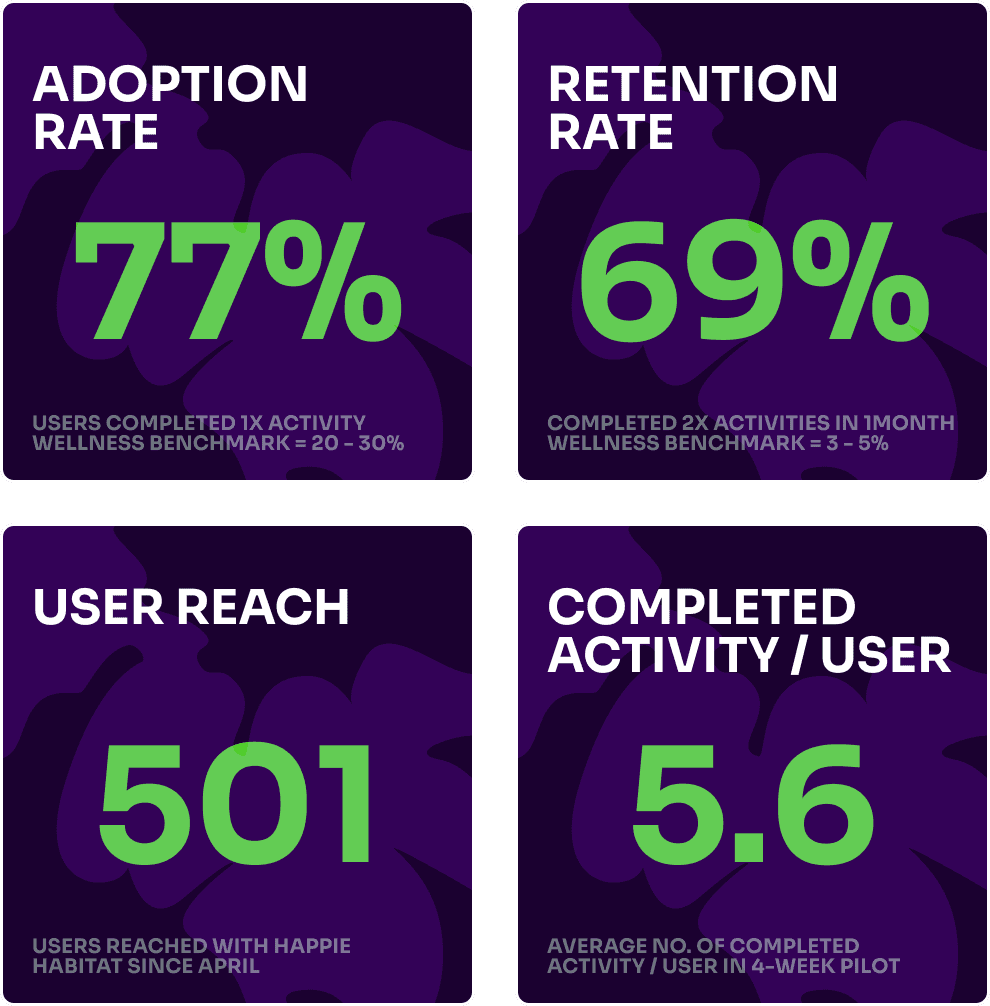
Across the 8-week pilot, Wild Journal outperformed wellness benchmarks and showed strong user resonance.
77% adoption: users were more willing to journal during the workday
69% retention: guided check-ins improved emotional clarity
5.6 activities/user: breathing and reflection features drove repeated use
501 employees reached: conservation themes improved recall and engagement
These results validated that a nature-inspired, low-effort journaling experience can meaningfully support daily wellbeing.
05. Takeaways
Emotion-led design drives engagement.
Designing around how people feel during the workday helped create moments that felt grounding, gentle, and worth returning to, which became a key driver behind adoption and retention.
Small interactions can shift habits.
Lightweight prompts, quick check-ins, and nature-inspired breathing moments showed that behavior change often begins with simple, repeatable actions that don’t add mental load.
Visual storytelling shapes the experience.
Nature textures, soft motion, and animal cues created an emotional tone that users described as calming and positive, reinforcing both wellbeing and conservation values.
How might we empower change managers to drive AI adoption through real-time insights, smart automation, and evidence-based interventions?
